
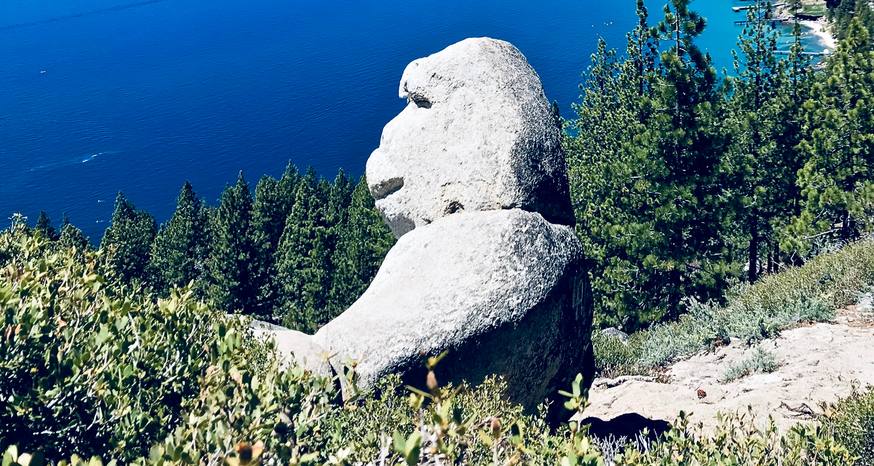
If you’ve ever hiked above Lake Tahoe to Monkey Rock, you know the moment: someone says, “Do you see the monkey?” and at first… you don’t. It’s just a pile of granite with a stunning view, until suddenly the face appears and you can’t unsee it.
Leadership is full of those moments.
Most leaders are standing right in front of “Monkey Rock situations” every day—market shifts, team undercurrents, culture signals—hidden in plain sight until something helps them look from a different angle. The game-changer usually isn’t more data; it’s a subtle perspective shift that turns noise into a pattern and confusion into a clear next move.
Here’s the good news: you already have what you need.
If you’re reading this, it likely means you care about how you lead and how your team experiences you—that alone puts you in a small minority. The “win” is recognizing that perspective is a muscle you can train in small, deliberate ways next week, without flying to Tahoe or adding another standing meeting.
Three perspective-shift prompts for next week
Change the angle in your next 1:1
Before your next one-on-one, ask yourself: “What might this person be seeing that I’m not?”
In the meeting, try this exact question: “What’s one thing you think I’m underestimating or overestimating right now?”—and then listen without defending.
Reframe a ‘problem’ as a pattern
Pick one nagging issue (missed deadlines, tension between teams, stalled initiative) and ask: “If this wasn’t about effort or talent, what system or pattern might be driving it?”
Invite your team to join you: “Imagine this issue is Monkey Rock—what shape might we see if we step back and look at the last six months instead of this week?”
Run a 10-minute “Monkey Rock walk”
One day next week, take a short solo walk—around the block, the campus, or even just a few flights of stairs—and ask three questions: “What am I assuming is ‘just a rock’? What if I’m wrong? What else could this be telling me?”
Jot down one insight and one small action you can take within 24 hours; the goal is not a grand strategy, but one perspective-driven experiment.
At Move Mountains, this blend of awareness, intention, and small, embodied actions is the core of what is called Mindful Leadership—training leaders to notice differently so they can lead differently. If you try any of these prompts next week and discover a “monkey in the rock” moment, that’s the real measure of success.